Scope of this guide
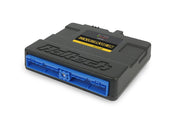
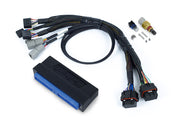
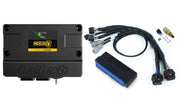
This covers fitting a Haltech iC-7 to an R33 Skyline GTS-T with the factory cluster removed completely. It assumes the dash gets its main power and ground through the CAN cable from a Haltech ECU, such as one running on the Nexus S3 R32/R33 plug-in harness kit. Other Skylines and other cars have different cluster wiring, so don't use these notes on anything else without checking the pinouts yourself.
How the wiring maps across
The connection itself is between the iC-7's 34-pin connector and the plugs that fed the R33 cluster. The plugs look alike, so use their keying to tell them apart, and remember that pin views are normally drawn from the back of the plug, with the wires facing you.
We recommend tapping into the existing cluster wires instead of cutting the factory plugs off. That way the original cluster can go back in later with no repairs. There's plenty of room inside the dash shroud to tuck the adapter wiring behind the iC-7.
Need the pin-to-pin diagram? Ask us and we'll send it over with advice for your build.
Five things the stock cluster was doing
1. Converting the speed signal
On the R33, the transmission speed sensor is a VR (reluctor) sensor. The factory cluster reads it, converts it to a clean digital signal and sends that on to the ECU and other modules. Remove the cluster and that conversion is gone.
The fix is to run a new wire from the speed sensor straight to a spare input on the Haltech ECU. This is not the existing "vehicle speed" wire in the factory ECU harness, which carried the cluster's converted signal. It's an extra wire you add and then configure:
| ECU setting | Value | Why |
|---|---|---|
| Sensor Type | Reluctor | The raw sensor is a VR type |
| Edge Select | Falling | Matches the sensor's signal |
| Pull Up | Disabled | A VR sensor makes its own voltage |
| SPI Arming Voltage | 0.5 V | Ignores small noise below this level |
| Vehicle speed calibration | About 4850 pulses/km | A starting value. Tire size and diff ratio change it |
Always confirm the calibration against GPS speed and adjust. See vehicle speed setup for Nexus or Elite, and Hall effect or reluctor? for more on VR sensors.
2. Feeding speed to other systems
Speed-sensitive power steering and other factory systems used to get their speed signal from the cluster. If you want them to keep working, you'll need an ECU DPO set up to send a frequency back into that circuit, on another new wire. The correct frequency for the R33 hasn't been confirmed on a car yet, so expect to experiment and verify it yourself. If you'd rather not, the rest of the car will still run, those systems just won't see road speed.
3. Exciting the alternator
The R33's charge warning lamp is also part of the alternator's excitation circuit. With the cluster gone, the regulator may not switch on and the car won't charge. Fit a 100 ohm resistor in place of the lamp. That's the same value the factory cluster uses as a backup in case the bulb fails, and a common 100 ohm 1 W resistor is fine. With it in place you should see about 14.0 V at the battery, dropping to around 13.5 V under load. Check it with a meter after the install.
4. Grounding the speed sensor
The transmission speed sensor got its ground through the factory cluster. Add a short ground loop so the sensor still has one, or the ECU won't see a reliable speed signal.
5. Optional: tying sensor ground to body ground
The fuel level sender and other cluster sensors reference body ground. Linking the iC-7's sensor ground to body ground is optional, but it can improve the accuracy of those readings.
Fuel level
The factory fuel sender works with the iC-7. Enter a voltage-to-level table for it in ICC, then check the gauge at a couple of known fill levels. We can send the R33 voltage scale on request.
Checks before you button up the dash
- Battery voltage climbs to around 14 V with the engine running.
- Vehicle speed reads correctly against a GPS source.
- Indicators, high beam and warning lights all show on the iC-7.
- Fuel level makes sense and doesn't jump around.
- No new warning lights or faults from other vehicle modules.
Troubleshooting
| Symptom | Usually |
|---|---|
| Battery voltage sits around 12 V with the engine running | Missing or open 100 ohm excitation resistor |
| No vehicle speed at all | Sensor ground loop missing, or signal wired to the old factory VSS wire |
| Speed reads but is erratic | Arming voltage too low, or the wrong edge selected |
| Speed is consistently off | Pulses/km needs adjusting for your tires and diff |
| Speed-sensitive power steering no longer changes with road speed | No speed frequency being sent back to the steering system |
Doing a full standalone dash install on a different car? Our standalone iC-7 install guide covers the general process, and how to crimp like a pro will help the new wiring last.