Why add an oil temperature sensor
Coolant temperature tells you how the cooling system is coping. Oil temperature tells you how hard the engine itself is working, especially on track or on the dyno, where oil can climb long after coolant has leveled off. On a Nexus ECU an oil temp sensor feeds your logs and can drive Engine Protection.
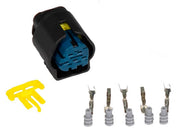
Most oil temperature sensors are simple two-wire thermistors: one wire is the signal to an ECU input, the other is signal ground. Haltech's high range oil temperature sensor is the one we fit most, and the Bosch-style plug and pins are sold separately if you're building your own loom.
Wiring
In the Wiring node, assign the sensor to any free AVI. Enable the Pull Up. It connects an internal 1k ohm resistor between the input and 5V, which a two-wire sensor needs to produce a readable voltage. Without it, the reading will sit pinned and never change.
Calibration
The configuration node holds the temperature calibration. For a Haltech sensor, use Load from File to drop the correct calibration straight in. For anything else, enter the manufacturer's resistance or voltage data by hand, then use Save to File so you can reuse it. Sanity check the result on a cold engine: oil temp should read close to ambient and coolant temperature.
Display and diagnostics
| Setting | What it does | Our advice |
|---|---|---|
| Warning minimum / maximum | Where number displays, gauges and bars for oil temp switch to their low or high warning state | Use them as a heads-up for the driver, set from what your engine normally runs |
| High / low voltage DTCs | Flag a sensor or wiring fault from the raw voltage | Enable them so a broken wire can't pass as a real reading |
| Minimum / maximum temperature DTCs | Flag an oil temperature outside your limits | Set the maximum to what your oil and bearings can safely handle, with margin |
| DTC severity | Links each DTC to an Engine Protection level | A warning level for voltage faults, and a stronger response for real overtemperature |
Pair this with oil pressure for the best protection. We cover that combination in oil pressure and engine protection. On an Elite ECU, see the ESP version: oil temperature sensor.