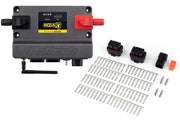
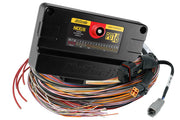
How Nexus headlight control is wired
The idea is simple: the dash switches become inputs to the ECU, and the ECU decides what to turn on through its outputs. That's handy on race cars and custom builds with no factory body control module. The logic, such as whether high beam is enabled and whether flash-to-pass is allowed, is set up on the Headlights node. The Wiring node is just where you tell the ECU which pins are doing each job.
Every item below works the same way: Edit opens the pin picker so you can assign or change the pin, and Clear removes the assignment.
Inputs: what the driver asks for
| Input | Used for | Shown when |
|---|---|---|
| Headlight Input | The main light switch | Always |
| High Beam Input | The high beam switch | High Beam is enabled in the headlight setup |
| High Beam Flash Input | A momentary flash-to-pass switch | High Beam Flash is enabled in the headlight setup |
If you can't see an input you expect, go back to the Headlights setup and turn on the feature first.
Outputs: what the ECU switches
| Output | Drives |
|---|---|
| Headlight Output | The low beam headlamps |
| Parklight Output | The parking lights |
| High Beam Output | The high beam headlamps |
Headlamps draw far more current than an ECU output is designed to switch directly. Have the output trigger a relay coil, or a PDM channel, and feed the lamps through their own fused supply. The same approach applies to brake light wiring.
What to check before first power-up
- Each switch input is wired to match how it's configured: switching to ground or to 12V.
- No output is shared with another function. NSP will show a pin as used if it's already assigned elsewhere.
- Relay coils have a proper ground or supply on the other side, and the lamp circuits are fused.
- With the engine off, test each switch and watch the input channel change in NSP before you look at the lamps.
Not sure your plan will work? Send us your wiring plan and we'll look it over.