How the factory CAS works
Nissan's RB engines use an optical cam angle sensor (CAS) driven from the exhaust camshaft. Inside, a slotted disc spins past a light source, and the sensor reports two things to the ECU from that one disc: how fast the engine is turning, and where each piston is in its cycle. The ECU uses both to time every injection and spark event.
On paper that's tidy. In practice it asks a sensor on the camshaft to tell the ECU where the crankshaft is.
Where the error comes from
The camshafts are driven from the crank by a rubber timing belt. A belt is not a solid link. Under load, and especially under the rapid accelerations and decelerations of a hard-revving engine, it stretches and flexes. When it does, the cams (and the CAS) lag or lead the crank by a few degrees.
The ECU has no way of knowing that. It believes the CAS, so any belt deflection shows up directly as error in the crank position it calculates. The result is spark and injection happening at a slightly different point than the map asked for, and that point moves around as load and RPM change.
How much does it matter?
On a stock engine at stock power, the effect is small and often hard to notice. Add boost, bigger cams, stiffer valve springs and more RPM, and belt deflection grows quickly. Haltech reports seeing as much as 8 degrees of belt deflection on RB engines making around 700 kW (roughly 940 hp).
Put that in tuning terms. Eight degrees is a huge amount of ignition timing, often more than the whole margin between a safe tune and detonation on a high-boost engine. If your timing can wander by that much without the ECU knowing, you're forced to tune conservatively everywhere to cover the worst case, and you still can't be sure what the engine is actually getting.
| Factory CAS only | Crank trigger + cam home | |
|---|---|---|
| Crank position measured | Indirectly, through the belt | Directly, at the crank |
| Effect of belt stretch | Timing and injection error | Effectively none |
| Signal type | Optical, from a cam-driven disc | Reluctor or Hall effect, your choice |
| Best suited to | Stock and very mild builds | Anything modified, and anything you want tuned precisely |
The fix: split the job in two
The solution is to stop asking one cam-driven sensor to do everything. A crank and cam trigger kit separates the two jobs:
- A crank trigger reads engine speed and position straight from the crankshaft, so belt movement no longer affects it.
- A cam sensor is used only as a home (sync) signal, telling the ECU which half of the four-stroke cycle the engine is on.
The key detail is where the cam signal lands. It's positioned so it arrives in the middle of a gap between crank teeth. That leaves plenty of room either side, so even if the belt lets the cam move several degrees, the home signal still falls in the same gap and the ECU's sync is never in doubt. Belt deflection stops being a timing problem.
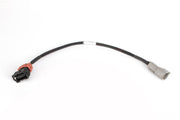
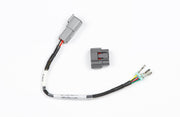
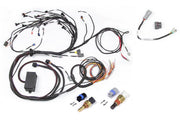
One example is the Platinum Racing Products Pro Series crank trigger. If you are running the factory CAS on an Elite 2000 or 2500 in the meantime, Haltech offers CAS sub-harnesses for the RB twin cam and the RB30, and a complete terminated RB twin cam harness that includes the CAS lead.
Is it worth it on a low-power RB?
The benefit is biggest on high-power engines, but we'd still recommend it on modest builds. A crank trigger gives the ECU a cleaner, more stable reference, which means timing that stays where you put it, smoother running, and a tune you can trust. It also removes one of the aging parts on an engine that's likely decades old.
Match the sensor to the wheel
Whether you use a reluctor (VR) or Hall effect sensor depends on the trigger wheels you run, in particular how many teeth they have and how fast they'll pass the sensor. Our Hall effect or reluctor guide walks through the choice, and engine trigger systems explained covers the bigger picture.
Always confirm your TDC offset with a timing light before tuning. A new trigger means a new reference point. See how to set your TDC offset angle.
FAQ
Is the factory RB CAS bad?
No, it works fine on stock engines. It's the way it's driven that limits it once power and RPM rise.
Will a new timing belt fix CAS timing drift?
A fresh belt at the right tension helps, but every belt flexes under load. Only a crank-mounted trigger removes the belt from the equation.
Do I still need the CAS?
You still need a cam signal for sync. Some trigger kits include a cam sensor and others sell it separately, so check before you order. If you're unsure which setup suits your build, ask us.