Why log fuel pressure at all?
Your tune assumes the injectors are flowing what they flowed on the dyno. That only holds if the pressure pushing fuel through them stays where it was. A tired pump, a clogged filter, a sticking regulator or a pump that simply isn't big enough will all drop pressure, and the first symptom you notice without a sensor is often a lean pull, detonation or worse.
With a sensor in the fuel system, the ECU can see the problem as it starts, log it so you can find the cause, and on supported Elite models step in with engine protection to limit power until you back off.
Choosing and mounting the sensor
We normally fit the Haltech 150 psi TI pressure sensor, which handles fuel and oil and has plenty of range for a typical return-style port-injection fuel system. If your rail pressure plus boost could run near the top of that range, the 250 psi version gives you more headroom. You can use another brand of sensor, but you'll need its wiring details and calibration data.
These sensors don't like vibration. Bolting one straight to the engine or to a rail that shakes with it shortens its life. Good options:
- A spare port on the fuel pressure regulator, as long as the regulator is mounted to the chassis or somewhere that doesn't move with the engine.
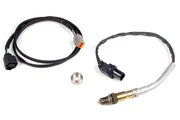
- A remote mount on the firewall or inner fender with a short hose to the fuel system. The pressure sensor extension kit is made for exactly this.
Setting it up in the software
Configure the input before you run any wires. The software only offers inputs that can actually read a fuel pressure sensor, so picking the channel first means you won't end up with the sensor landed on a pin that can't be used. Any spare AVI or SPI will do.
- Open Main Setup (the gear icon) and go to Functions.
- Choose Add/Remove Functions, search for Fuel Pressure Sensor, move it across to the active list and click OK.
- Select the new Fuel Pressure Sensor function, then use Edit Connection to choose a spare input.
- Set Pull Up to Disabled. The sensor drives its own signal, and a pull-up resistor will pull the reading off.
- Load the calibration for your sensor, or type it in by hand, and click OK.
- Now wire the sensor to the input you chose.
Before you trust the number, check it against a mechanical gauge with the pump primed and the engine off. If the two disagree, check the calibration and the pull-up setting first.
Base fuel pressure and injector differential
Next, tell the ECU your Base Fuel Pressure in Main Setup under Engine, then Fuel. This is the pressure the system sits at when the manifold is at atmospheric pressure. You can find it two ways:
- Run the pump with the engine off and read the pressure.
- Or run the engine with the regulator's vacuum reference hose pulled off (and plugged on the manifold side).
Base fuel pressure doesn't change your fueling at all. It's a reference the ECU uses to judge whether fuel pressure is healthy for engine protection.
Why the regulator tracks boost
What the injector cares about is the difference between rail pressure and the pressure in the port it's spraying into. Haltech calls that difference Injector Pressure Differential. On a boosted engine, manifold pressure pushes back against the injector, so a manifold-referenced regulator raises rail pressure one-for-one with boost to keep that difference constant.
A quick example with round numbers. Say your base pressure is 43.5 psi (3 bar). At 15 psi of boost, a healthy regulator should put the rail at about 58.5 psi. The differential stays at 43.5 psi, so the injector flows the same per millisecond as it did in vacuum. If the rail stayed at 43.5 psi instead, the injector would only see 28.5 psi of differential and flow noticeably less, and your tune would go lean just as load climbs. On idle vacuum it works the other way: the regulator drops rail pressure so the differential still holds. For the full background, see why you need a fuel pressure regulator.
Reading the data to diagnose problems
The channel to watch is Injector Pressure Differential, not raw fuel pressure. On a healthy system it's close to a flat line whatever the engine is doing. Put it on a trace in your logs alongside rpm, manifold pressure and injector duty.
| What you see | What it usually means |
|---|---|
| Flat differential through the whole pull | Fuel supply is keeping up. Good. |
| Differential sags as rpm and injector duty climb | The pump can't supply what the injectors are drawing. The system is out of flow. |
| Short blips when boost comes on or drops off quickly | Normal. The regulator takes a moment to catch up with fast manifold pressure changes. |
| Differential rises under boost | Regulator over-compensating, or its reference hose isn't connected where you think |
| Differential falls under boost from the very start | Regulator reference hose disconnected, split or plumbed to the wrong place |
| Reading that's erratic even at idle | Sensor wiring, pull-up left enabled, or a damaged sensor |
If differential drops at high load, the answer is more fuel flow: a bigger pump, better wiring to the pump, a larger feed line or filter. Raising base pressure makes the pump work against more head pressure, so it flows even less and the drop gets worse.
If the pump is the suspect, start with its supply voltage. Our fuel pump wiring guide covers relays and wire size. Once fuel supply is stable, fine-tune how the injectors behave with injector dead time.
Engine protection for low fuel pressure
This part applies to Elite models that support engine protection, such as the Elite 1500 and 2500. There are two halves: detecting the fault and deciding what to do about it.
1. Detect the fault
In the Fuel Pressure Sensor function, open the Diagnostic tab and tick the Operating condition. That's the check that raises code P0191 when fuel pressure falls out of its operating window. You then choose the conditions it has to see before flagging it, typically a combination of:
- A minimum boost level, so it only watches when the engine is actually loaded.
- A minimum throttle position.
- How far injector differential is allowed to fall below base fuel pressure.
You also set a DTC Severity. We usually give low fuel pressure severity 2: it can damage an engine, but it's rarely as instantly fatal as losing oil pressure, which we save severity 3 for. Clicking a setting name in the software opens a short help note if you're unsure what one does. The code is also a useful breadcrumb afterward, because it tells you exactly why the ECU went into protection.
2. Decide the response
Add Engine Protection in Main Setup under Functions, the same way you added the sensor, then enable the severity levels. Set up the response for the level your fuel pressure code uses. Tools you can combine:
- A richer mixture target, to buy some safety margin.
- A negative boost correction, to take airflow away.
- Ignition retard, to lower cylinder pressure.
- A reduced rpm limit using fuel cut.
- A maximum throttle limit, if the car has drive-by-wire.
The aim is to make it impossible for the driver to keep hurting the engine without noticing, while still leaving enough power to get home or off the track. The right values depend entirely on the engine and how it's used. For more on the response side, see Engine Protection.
Fuel pressure FAQ
Should I monitor fuel pressure or injector differential?
Log both, but diagnose with differential. Fuel pressure is supposed to move with boost; differential is supposed to stay flat. A drop in differential is the real sign of trouble.
Can the sensor go straight on the fuel rail?
Only if the rail and fittings aren't subject to much vibration. On most engines we'd rather remote-mount it with a hose, because a failed sensor can leave you with no protection at all.
Is a small pressure dip on boost onset a problem?
No. The regulator is mechanical and needs a moment to follow fast changes in manifold pressure. It's the sustained sag at high rpm and load that points to a supply problem.
Want a second set of eyes on your fuel system logs? Book a free 30-minute consultation.