Why watch diff temperature?
Gear oil breaks down quickly once it gets too hot, and a differential that's cooking its oil wears fast. Long track sessions, heavy launches, towing and limited-slip units working hard all push temperatures up. A sensor in the diff lets you see that in your logs, set a warning, and have the ECU respond through its Driveline Protection logic before damage is done.
Wiring
Most temperature sensors, including the Haltech high range oil temperature sensor, are simple two-wire parts:
- Signal goes to any free AVI (analog voltage input).
- Signal ground goes to the ECU's sensor ground, not a chassis ground.
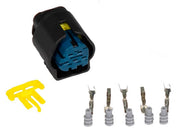
In NSP, open the Wiring node for Differential Oil Temperature and assign the AVI you used. Enable the pull up. A two-wire thermistor has no supply of its own, so the ECU's internal 1k ohm resistor to 5V is what creates a voltage that changes with temperature. Without it, the reading won't make sense. If you need a connector, Haltech sells the plug and pins for the Bosch-style oil temperature sensor.
Calibration
The main Differential Oil Temperature node holds the calibration table that converts voltage to temperature. For a Haltech sensor, use Load from File to drop in the matching calibration. For another brand, enter the manufacturer's resistance or voltage data by hand, then use Save to File so you can reuse it on the next car.
With the car cold and sitting overnight, diff temperature should read close to air and coolant temperature. A big difference points to the wrong calibration or a pull up setting problem.
Display and warnings
The Display node sets the lower and upper warning thresholds. When the temperature passes either one, number displays, gauges and bars for this channel switch into their warning state. For a diff, the upper warning is the one that really matters; set it at a temperature you'd want to back off at, based on your gear oil and hardware.
Diagnostics and protection
The Diagnostics node gives you four checks:
| Check | What it catches |
|---|---|
| Low voltage | A shorted signal wire |
| High voltage | An open circuit or unplugged sensor |
| Minimum temperature | Temperature under your set limit |
| Maximum temperature | Temperature over your set limit |
Each check can carry a DTC severity, which tells the ECU which Engine Protection level to apply when it triggers. We'd use a lighter response for the voltage faults, since those mean the sensor itself is in doubt, and save the stronger response for a genuine overtemperature.
Setting up another temperature channel? See oil temperature, or temperature sensor problem diagnosis if the reading looks wrong.