If the ECU can't see the engine turning, nothing else matters. Without a speed and position signal it has no idea when to fire a spark or open an injector, so it does neither. That makes the crank and cam sensors the most important inputs on the engine, and the first thing we check on any no-start.
These sensors don't send a position number. They send a stream of pulses as teeth or windows on a wheel pass by. The ECU is told what pattern to expect, compares that with the pulses it actually sees, and from the timing between them works out engine speed and exactly where the crank is at any moment. The cam signal adds which half of the four-stroke cycle the engine is on, which sequential injection and coil-on-plug ignition need.
You'll meet two kinds of sensor:
- Reluctor sensors: magnetic pickups that generate their own AC voltage, which gets stronger as the engine speeds up. Two wires, sometimes plus a shield.
- Hall effect and optical sensors: powered sensors that output a clean digital on/off square wave. Usually three wires: power, ground and signal.
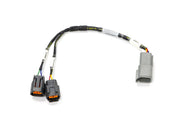
Which one you have decides how the input is wired and configured. If you're not sure, see Hall effect or reluctor. On a Mazda 13B rotary running an Elite 1000 or 1500, the crank angle sensor sub-harness makes the connection tidy.