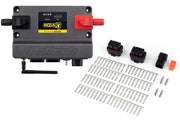
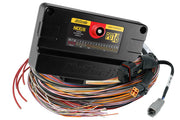
Why measure line pressure?
In an automatic, hydraulic line pressure is what holds the clutch packs and bands together. Too little and they slip and burn. Too much and shifts get harsh and parts wear. A line pressure sensor lets the Nexus see what's actually happening, so you can:
- Map and verify transmission tables such as line pressure control.
- Log pressure through every shift to spot slipping or slow apply.
- Use engine protection to react if pressure goes missing, which can save a transmission.
These are powered sensors with three wires: 5V supply, signal to the ECU, and signal ground.
Setting it up in NSP
Calibration
The main node holds the sensor calibration. For a Haltech pressure sensor, click Load from File and pick the matching calibration. For anything else, enter the voltage-to-pressure points from the manufacturer's data sheet. Use Save to File to keep a custom calibration for future maps. The 500 PSI TI pressure sensor is a common choice, but check its range against your transmission's maximum line pressure.
Display
- Warning Minimum: the pressure below which gauges, bars and number displays for this channel show their low warning.
- Warning Maximum: the pressure above which they show their high warning.
Diagnostics
You can enable four fault checks: high voltage and low voltage, which point to wiring faults, plus minimum and maximum pressure, which point to real hydraulic problems. Each can have its own DTC severity to trigger an engine protection level.
Wiring
Assign the sensor to any free AVI (analog voltage input). Leave the pull-up disabled, because a powered sensor drives its own signal and a pull-up would skew the reading.
| Symptom | Usually |
|---|---|
| Pressure reads high or offset at rest | Pull-up left on, or wrong calibration |
| Voltage DTC with engine off | Missing 5V supply or ground at the sensor |
| Pressure drops during a shift | A real hydraulic issue worth investigating before more power |
See our transmission control overview for how this ties into the rest of the Nexus transmission strategy.