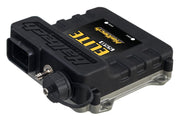
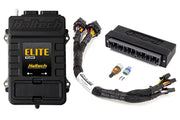
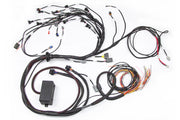
The Elite drives a tachometer with a switched output that turns on and off in step with engine speed. That output only pulls the wire to ground. To produce the voltage signal most tachs want, it needs a pull-up resistor between the output and the signal voltage the gauge expects.
Wiring tab
Pick the Tacho Output. We use DPO-1, which is also the default. It has a pull-up built in with an adjustable voltage (5.00V by default), so there's no external resistor to add. If your tach wants a different signal level, change the pull-up voltage in software instead of building a resistor into the harness.
Active State sets the output polarity. At the default of Low, the output grounds the wire when it's on. High inverts it, grounding the wire when the output is off. Start with the default and switch to High only if the tach reads erratically or not at all and the wiring checks out.
Tacho tab
| Setting | What it does | Our advice |
|---|---|---|
| Pulses Per Cycle | How many pulses the ECU sends per engine cycle | Start with the number of cylinders, then compare against the RPM shown in ESP and adjust if the tach reads double or half |
| Tacho Needle Sweep RPM | Sweeps the needle up to this RPM and back when the ECU powers up | A nice touch on a street car. Set to 0 to turn it off. |
Quick fixes
- Tach reads exactly double or half: Pulses Per Cycle is wrong for that gauge.
- Needle is dead: wrong output selected, no pull-up voltage, or the gauge has no power.
- Needle jumps around: try the other Active State, and check the pull-up voltage suits the gauge.
Using a Nexus instead? See tacho setup on Nexus. While you're wiring gauges, shift lights and the RPM limiter are worth setting up too.