How a sequential twin turbo works
In a sequential system, a small primary turbo does all the work at low RPM, so boost arrives early. As exhaust flow builds, the secondary turbo is brought up to speed and then connected to the intake, so the engine has enough turbo capacity at high RPM. The hard part is the handover. Done badly, you get a boost dip or a surge in the middle of the rev range. Done well, it feels like one big, responsive turbo.
On the FD RX-7 the handover is managed by several valves, each switched by a solenoid. The Elite's Sequential Twin Turbo (RX-7) function drives those solenoids so they operate safely and in the right order.
The four valves
| Valve | Its role in the handover |
|---|---|
| Pre-control valve | Lets a little exhaust reach the secondary turbo early so it starts spinning before it's needed |
| Exhaust valve | Opens the secondary turbo's exhaust path fully so it can produce boost |
| Charge relief valve | Vents the secondary compressor's output while it's spooling, before it's connected to the intake |
| Charge valve | Connects the secondary compressor to the intake once it's ready to contribute |
Wiring and setup in ESP
In the Wiring tab, give each valve its own output. A DPO or a stepper output is the usual choice for all four:
- Pre-control valve output
- Exhaust valve output
- Charge relief valve output
- Charge valve output
On the Settings tab, Pre-Control Frequency sets the switching frequency for the pre-control valve. Match it to the solenoid you're using.
These solenoids only switch vacuum and pressure to the actuators. Split hoses, a leaking vacuum tank or a stuck actuator produce exactly the same symptoms as bad settings. Pressure-test the hose network before you blame the tune.
Common symptoms
| Symptom | Usually |
|---|---|
| Boost dip at changeover | Secondary not pre-spooled enough, or a vacuum leak on the pre-control side |
| Never goes twin | Output not assigned, or exhaust/charge valve actuators not moving |
| Output tests work but valve doesn't | Solenoid wired but hose routing wrong |
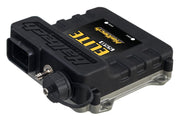
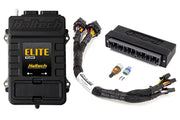
For the full tuning walk-through, read our sequential twin turbo guide, and pair it with boost control. Plug-in options for the FD include the Elite 2500 RX-7 FD3S S7/S8 and S6 kits.