What ride height data tells you
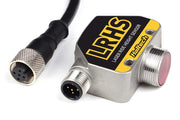
A front and a rear ride height sensor measure the distance from the chassis to the ground at each end of the car. Logged against speed, g-force and throttle, that data answers questions you can't answer in the pits:
- How much the car squats or dives under load, and whether suspension is sagging over a run.
- Whether a wing or splitter is deflecting, or the bodywork is moving at speed.
- Whether the chassis is twisting.
- How the car tilts when load changes suddenly.
For motorsport, a non-contact sensor such as the Haltech laser ride height sensor, with a range of 1 to 19.5 inches (25 to 500 mm), is the easy way to get it.
Setting it up in NSP
NSP has separate front and rear ride height nodes, each set up the same way.
Calibration
The main node holds the calibration. Use Load from File to load a saved calibration, or type the points in by hand. Save to File keeps a copy for other maps. To show height in inches or millimeters, change the unit in Preferences > Unit Options.
Display
- Display Minimum: where gauges, bars and number displays for ride height start.
- Display Maximum: where they end.
Set these a little either side of the range you expect so the gauge is useful, rather than to the sensor's full range.
Diagnostics
Enable the high and low voltage DTCs to catch wiring faults, and give each a DTC severity if you want engine protection to respond.
Wiring
Ride height sensors connect to an analog input. Any free AVI works. Turn the pull-up off.
Log a slow roll on a flat surface to capture your static ride height reference. Every run after that can be compared against it.
Pair ride height with a reliable vehicle speed signal so you can see how the car's attitude changes as speed and aero load build. Questions about fitting sensors to your chassis? Contact us.