Why the LS1 coil is so common
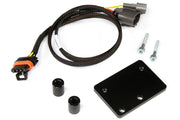
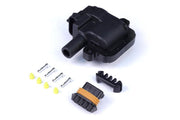
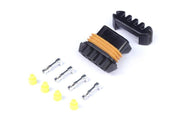
The LS1 coil came on most GM Gen III LS engines and has since ended up on everything from rotaries to four-cylinders. It's a high-output inductive coil with the igniter inside the coil body, so a Haltech ignition output can trigger it directly with no separate igniter module. Haltech sells it as the LS1 coil with built-in igniter (HT-020102), and the matching plug and pins (HT-020103) if you're building your own harness. Not sure whether your current coils need an igniter? See internal igniter or not.
ECU settings
| Setting | Value | Why |
|---|---|---|
| Ignition Mode | Depends on your install | Direct fire for one coil per cylinder with a cam signal, or wasted spark if you're pairing cylinders |
| Ignition Edge | Falling | The coil fires when the ECU signal drops |
| Dwell Mode | Constant Charge | Holds a consistent charge time across rpm |
Haltech publishes a dwell table for this coil. Use it rather than guessing, since too much dwell overheats coils and too little costs spark energy at high rpm. Need it? Ask us and we'll send it over with advice for your build.
Set the ignition edge and dwell before plugging in the coils. A wrong firing edge can hold the coils charged and damage them.
Power supply: bigger than you'd think
Each LS1 coil can pull as much as 10A. Eight of them on one standard 30A relay, at high rpm and high cylinder pressure, can run short of supply. In rare cases on big-power engines, we'll give each pair of coils its own fuse and relay. Wire gauge matters too: if the feed can't carry the current, the voltage at the coil sags and so does the spark. On a high-power build, size the supply for the coils, not for the look of the loom.
The two grounds, explained
LS1 coils have two ground pins, and they do different jobs:
- Pin A is the high-current return path for the spark. It belongs on the cylinder head.
- Pin B is a reference for the ECU's trigger signal. It belongs on the ECU signal ground.
If in doubt, joining both grounds and running them to the cylinder head is an acceptable approach. It also sidesteps a nasty failure: if the engine's ground strap is weak, spark current can find its way back through the coil's reference ground. That lifts the ground the ECU signal is measured against, so the coil may not see the trigger and won't fire. Joining the grounds hides that symptom, but the real fix is always a solid engine-to-chassis and engine-to-battery ground.
Plug leads need the right boot
The LS1 coil's output tower needs a lead with the correct end, one that has a ferrule. With the wrong lead, the spark can jump from the discharge post to the coil's metal mounting body instead of going to the plug. That shows up as a misfire under load that's easy to blame on the tune. Use leads made for LS coils.
Related coils
ICE Ignition makes its own variant of this coil. See ICE Ignition LS1 coil for its settings. The later LS2 coil is a different part with its own settings, so don't mix them up.