What the table does
Coolant Temp Correction adjusts fuel by a percentage based on engine coolant temperature. Positive numbers add fuel, negative numbers take it away. It sits on top of your base fuel calculation, so once the engine is fully warm this table should normally be doing nothing at all.
Why a cold engine needs more fuel
When the intake ports and cylinder walls are cold, some of the injected fuel condenses on them instead of staying suspended as a vapor. That fuel can't burn properly, so the mixture in the cylinder ends up leaner than the injector pulse suggests. Adding fuel while cold makes up for it. As the engine warms, the fuel atomizes properly again, and the enrichment should taper away.
Shaping the table
- Cold end: the most enrichment, at your lowest coolant temperatures.
- Warm-up: a smooth taper back toward 0% as the engine approaches operating temperature. A typical table is back to zero by around 158 °F (70 °C).
- Hot end: optionally, some extra fuel above your highest desired coolant temperature. The extra fuel helps cool the combustion chamber and gives a little thermal protection.
Tune it in real cold starts, watching lambda during warm-up, and keep the curve smooth: steps in this table become stumbles on the road. It works alongside post start correction, which handles the first moments after the engine fires. See also the other fuel corrections and the air temp correction.
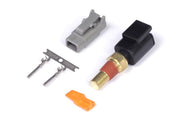
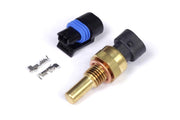
All of this depends on an accurate reading, so use a known sensor such as the Haltech coolant temperature sensor (1/8 NPT) with its matching calibration.