What the table does
Hot air is less dense than cold air, so the same manifold pressure carries less oxygen on a hot day. Fueling needs to track that, or the mixture drifts. This table applies a fuel correction based on intake air temperature.
With Auto VE Air Temp Compensation on
When Auto V.E Air Temp Compensation is enabled, the ECU already accounts for air density on its own. This table then becomes an extra correction on top, so set it to 0% everywhere before you start tuning. Otherwise you'd be double-correcting and chasing your tail.
In that mode, we mostly use it as a safety tool rather than a density correction. For example, you might add a little fuel at very high air temperatures, where the engine is closer to knock and a richer mixture helps keep combustion temperatures in check.
Add safety fuel only at the hot end of the table, and only after checking logs. Adding it across the whole range just makes the car run rich all the time.
Get the sensor right first
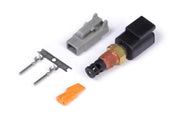
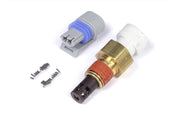
The correction is only as good as the air temperature reading. A slow sensor, or one mounted where it heat-soaks, gives a reading that lags behind reality. We like a fast open-element sensor such as the Haltech 1/4 NPT air temp sensor or the M14 small-thread version, fitted after the intercooler.
Related corrections: Coolant Temp Correction, Barometric Correction, and the timing side in Air Temperature Ignition Correction. All of them are listed under Corrections.