The check
Once your trigger settings are in, crank the engine with the ESP software connected and watch the RPM reading. With the trigger set up correctly, you should see a cranking speed somewhere between about 80 and 300 RPM, depending on the engine, starter and battery. Just as important, the number should be steady. A reading that holds around the same value while you crank means the ECU is counting teeth consistently.
Before you crank
Do this check with the injectors disabled and the ignition disconnected, so the engine can't fire or flood while you test. See disable injectors and disconnect ignition.
If RPM reads zero or jumps around
Either result points to the trigger wiring or setup. We work through it in this order:
- Wiring: confirm the crank and cam sensors are wired to the right ECU pins, with correct power and ground for Hall sensors and the right polarity for reluctors. Our trigger wiring guide covers this.
- Sensor type: a Hall sensor set up as a reluctor (or vice versa) often reads zero.
- Trigger settings: check the tooth count, missing teeth and edge against your engine's pattern.
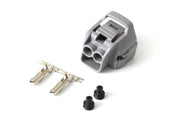
- Connectors: old factory connectors are a common source of intermittent signals. If yours is cracked or corroded, replace it; for example, a factory Toyota 2JZ crank/cam plug and pins kit covers that engine.
Once you have a steady RPM, move on to calibrating ignition timing.