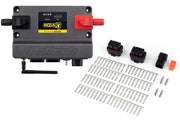
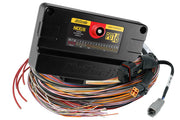
The torque reduction shift tables set how much ignition retard the Nexus applies during each gear change. Retarding timing briefly cuts engine torque, which unloads the gearbox so the shift goes through faster and with less shock.
There's a separate table for every gear change: one for 1st to 2nd, another for 2nd to 3rd, and so on up the box. That matters because the lower gears multiply torque the most, and they usually need a different amount of reduction from the tall gears. Each table can be mapped in up to three dimensions, so the retard can change with the conditions you choose rather than being a single fixed number.
How we approach it
- Start with modest retard and increase it in small steps, checking shift time and smoothness in the logs.
- Too little and the shift feels harsh or slow. Too much and you'll see a drop in RPM or a stumble, plus extra exhaust heat.
- Tune the lowest gears first, since that's where driveline shock is worst.
The retard works together with the cut time, delay time and ignition offset settings. See the torque reduction overview for how they fit together.