How a sequential system works
In a sequential twin turbo setup, the engine runs on one turbo at low RPM for quick response, then brings the second turbo in for top-end power. The switch is managed by valves in the exhaust and intake plumbing. Broadly, they:
- keep exhaust flow on the primary turbo at low RPM,
- start sending some exhaust to the secondary turbo so it begins to spin up,
- open the intake side so the secondary turbo's air joins the engine's supply once it's ready.
If those steps happen at the wrong time, you get a boost dip in the handover or a turbo that spins against a closed valve. The Nexus Sequential Twin Turbo function controls these valves so the changeover is smooth and safe.
The key settings
| Setting | What it does | Our advice |
|---|---|---|
| Pre-Control Frequency | The switching frequency for the pre-control valve | Match it to the solenoid fitted to your car |
| Charge Relief Offset | How many RPM before the secondary turbo is brought online the charge relief valve opens | Start with a small offset and increase it if you see a dip at the handover |
Why charge relief offset matters
Opening the charge relief valve a little early lets some exhaust bypass the primary turbo and begin driving the secondary before the intake flap switches over. The secondary is already turning when it takes on its share of the work, so boost doesn't sag while it catches up. Too little offset and you'll see a dip at the handover. Too much, and you take exhaust away from the primary earlier than necessary. Log boost and RPM through the changeover and adjust in small steps.
The rest of the setup
The handover RPM points and duty are set in their own tables: Secondary On RPM, Secondary Off RPM and Pre-Control Duty Cycle. Valve wiring is covered in sequential wiring, and overall boost level is still handled by boost control.
Haltech also publishes a Sequential Twin Turbo user's guide that goes deeper into setup. Ask us and we'll send it over with advice for your build.
For FD RX-7 owners
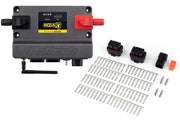
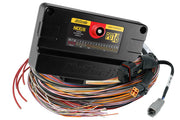
If your FD still has its factory sequential system, a plug-in harness such as the Nexus S3 FD S6 kit or FD S7 and 8 kit keeps the valves connected. Vacuum lines and valves on these cars are often tired, so check them before blaming the tune.