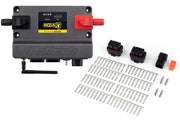
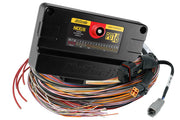
In NSP, most Nexus functions that can use a physical input or output have a Wiring node, and it's where those connections are assigned. Engine Protection has one too. At the time of writing, Haltech's own help for this particular node is still marked as coming soon, so we won't guess at every option in it.
What we can say is how we approach it. Engine Protection mostly works from sensors that are set up elsewhere, like oil pressure, coolant temperature and fuel pressure, along with the DTC severities you give each one. Those sensors each have their own wiring setup. If your version of NSP shows options in this node, only assign a connection when you know exactly what it's for, and check the assignment doesn't clash with another function.
Before you rely on any protection strategy:
- Confirm every protected sensor reads correctly and has sensible fault limits.
- Test each response safely, for example by lowering a limit temporarily with the engine idling, then put it back.
- Log the test so you can see the protection kick in.
For the protection logic itself, see Engine Protection and cylinder shutdown. If you're unsure about a setting in this node, ask us before you enable it.