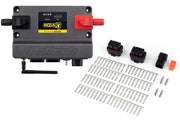
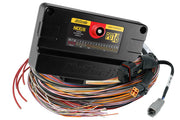
When all the conditions for decel fuel cut are met, the ECU doesn't cut fuel straight away. It waits for the time in the Cut Delay Time table first. If you get back on the throttle before that time runs out, fuel never gets cut at all.
Why a delay helps
- Smoother entry. A short pause stops the car from lurching as the engine suddenly goes from making power to making none.
- Room for gear changes. At higher RPM you're often lifting for a shift, not slowing down. A longer delay covers the time it takes to change gear, so the engine isn't cutting fuel and then immediately bringing it back mid-shift.
Typical values
| Engine speed | Typical delay |
|---|---|
| Low RPM | Around 200 to 500 ms |
| High RPM | Around 2500 to 3000 ms |
These are starting points, not rules. A quick-shifting manual or a sequential box may want less delay at high RPM, and a slow-shifting automatic may want more.
How we tune it
Drive the car the way it'll really be used and log RPM, throttle and the decel cut status. If you feel a jerk when lifting off gently, lengthen the low RPM delay. If fuel is cutting and returning during shifts, lengthen the high RPM delay. The exit point is set separately in the Min RPM table, and the rest of the function is on the main decel page.