
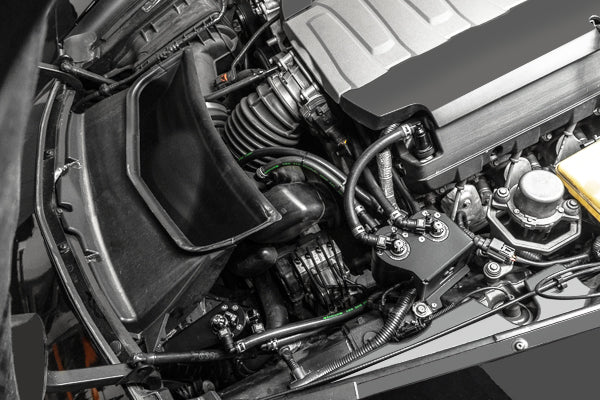
Radium Engineering Catch Can Kits | 2014-2019 Chevrolet Corvette C7 LT1 (20-0987-FL / 20-0986-FL / 20-1286-FL / 20-0985-FL)
SKU: 20-0987-FL
ECUs always ship FREE with Tuned By Shawn!
Manufacturer Limited Warranty
Radium Engineering Catch Can Kits | 2014-2019 Chevrolet Corvette C7 LT1 (20-0987-FL / 20-0986-FL / 20-1286-FL / 20-0985-FL)
Product details
Description
Every LT1 breathes its crankcase back into the intake. The only question is whether the oil goes in the manifold or in a can.
Radium Engineering Fluid Lock catch can kits for the 2014-2019 C7 Corvette pull oil and water condensation out of the crankcase gases before they reach the intake manifold, keeping the intake tract, throttle body, and manifold walls clean. Cleaner inlet air effectively raises octane, protects performance, and keeps oil vapor out of the cabin. Every kit is direct fitment with no drilling and includes everything for a complete installation.
Choose Your Kit
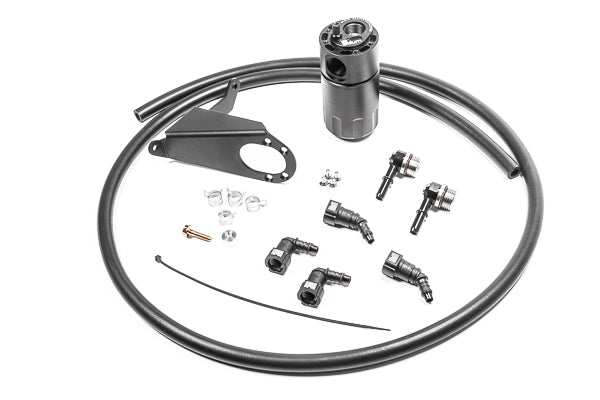
- PCV Catch Can Kit (20-0985-FL): single can inline between the PCV valve and the intake manifold, brackets to the LH side of the radiator on OEM threaded holes. Fits all 14-19 C7 LT1, wet or dry sump.
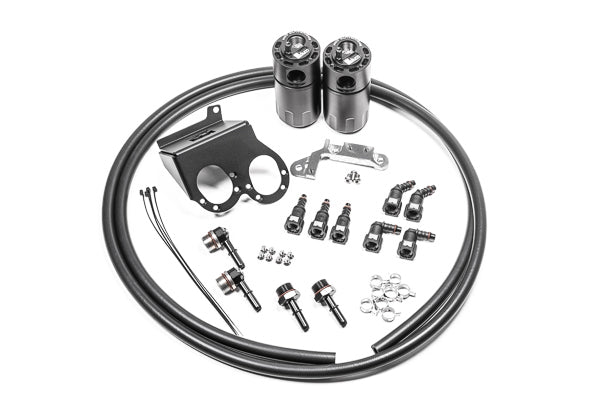
- Dual CCV Catch Can Kit (20-0986-FL): two cans on the crankcase vents, front LH of the engine. Fits 14-19 wet sump and 14-16 dry sump.
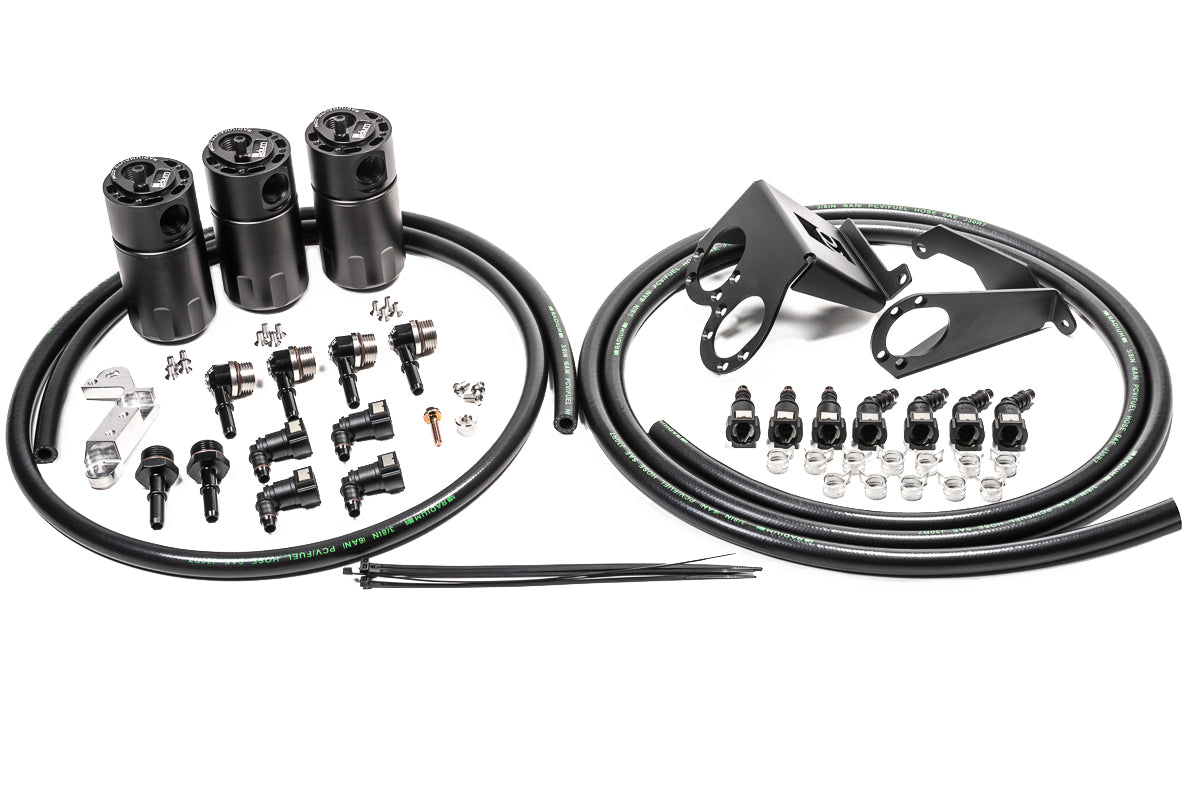
- Triple Catch Can Kit (20-0987-FL): the PCV and dual CCV kits together, the complete answer. Fits 14-19 wet sump and 14-16 dry sump.
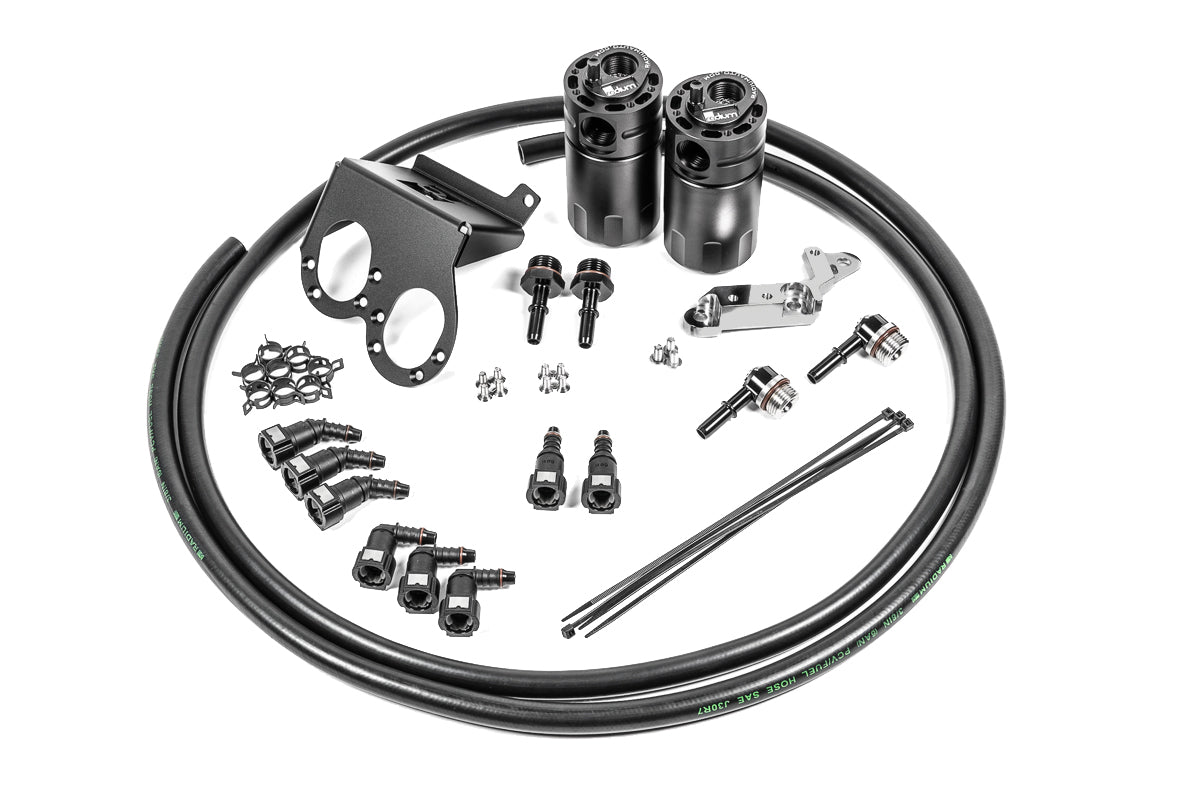
- Dual Catch Can Kit, 17-19 Dry Sump (20-1286-FL): PCV and CCV cans for the revised 17-19 dry sump system.
What You'll Feel
- An intake tract that stays clean instead of glazing with oil film
- Consistent performance from cleaner inlet air rather than progressively fouled charge
- No oil smell in the cabin from a vented system
- Fluid Lock protection: the can cannot overfill and dump contaminants back into the intake
- A bolt-in install with no drilling and no permanent modification
Features
- Patented Fluid Lock system that traps collected fluid and prevents reservoir overfill
- 7 fluid ounce capacity with O-ring sealed dipstick
- Large 10AN ORB inlet and outlet ports, 4AN ORB drain port
- 2-step oil separation baffling with integrated condenser
- Anodized aluminum brackets and stainless mounting hardware
- SAE quick connect fittings, 3/8in PCV rubber hose, and spring clamps
- Direct fitment, no drilling required
The Details
The two circuits do different jobs. The PCV hose sees metered vacuum at idle, cruise, and deceleration, which is exactly when it would otherwise draw crankcase vapor, unspent fuel, and oil sludge into the manifold right after a high load run. The CCV vents sit at atmospheric pressure at low load but flow hard out of the crankcase at wide open throttle, which is what coats the intake pipe. That is why the triple kit exists: it covers both paths.
Dry sump cars need care when ordering. The 20-0986-FL and 20-0987-FL cover dry sump only through 2016, because on those cars the RH valve cover vents through the dry sump tank before its catch can. The 17-19 dry sump system was revised and takes the 20-1286-FL instead. Wet sump cars have the full 14-19 range available.
The CCV bracket grounds through a polished billet plate secured to three OEM grounding points, so the aluminum bracket stays electrically bonded rather than floating. Emptying interval varies by car; check the dipstick at three to four weeks and set your own schedule from there. PCV cans typically collect more than CCV cans. Excessive collection usually points at something else, whether blowby from engine wear, an over-full oil level causing windage, or a PCV valve not closing under load.
Kit Includes
- Baffled oil catch can(s) with integrated condenser and dipstick
- Anodized aluminum mounting bracket(s)
- Polished billet aluminum ground plate (CCV, triple, and 17-19 dry sump kits)
- SAE quick connect fittings, 3/8in PCV rubber hose, and spring clamps
- Stainless mounting hardware
Applications
- 2014-2019 Chevrolet Corvette C7 with the LT1 engine, wet sump: all four kits per selection
- 2014-2016 C7 LT1 dry sump: 20-0985-FL, 20-0986-FL, and 20-0987-FL
- 2017-2019 C7 LT1 dry sump: 20-0985-FL and 20-1286-FL
Important Notes
- Dry sump fitment splits at 2017: the 20-0986-FL and 20-0987-FL do not cover 17-19 dry sump cars, which use the 20-1286-FL
- The optional petcock drain kit allows draining in place where there is clearance below the can